All industries have somewhere that’s the “center of the action” and then everywhere else: New York for finance, Texas for energy, Vancouver for junior mining promoters, and obviously the Bay Area for anything to do with software and startups. But there have also always been local ecosystems and scenes, which are interesting little kingdoms in their own right, and must compete as viable career options for talented builders deciding where to preferentially attach themselves.
I think one of the most underdiscussed second-order consequences of AI is that AI has changed the relationship between local tech scenes and SF. Today I want to share a few of my observations as to why:
- A decade ago (relative to other times in tech history), the opportunity cost of being outside Silicon Valley was at a local low: local tech scenes were comparatively attractive.
- The primary purpose of local tech scenes in that time was facilitating preferential attachment between local A-player talent and local A-tier startups.
- AI has changed things in two really important ways:
- The opportunity cost of being anywhere other than SF is back to all-time highs.
- It’s now much easier for an A-player who wants to stay local to simply start a one-person business and grow it themselves.
- As a result, we should expect local tech scenes to produce promising startups and select for promising talent in a very different way than they used to.
Local startup scenes in the 2010s
The single most important question for whether local startup scenes are viable or not is, “How much career risk does A-list talent take on by staying here rather than going to SF?” And back before Covid and LLMs, there was a decade in tech called “The 2010s”, where a lot of trends compounded in the local companies’ favour, but which have since reversed.
This was a decade of remarkable stability for building software companies. The mature Web 2.0 platform plus the iPhone & Android app stores meant you could build & distribute applications more or less permissionlessly; instant-backends like Heroku meant anyone, anywhere could get started on a pretty good technical foundation; Twitter in its early heyday was a perfect environment for discovery.
Just as importantly, the 2010s were a period of time where ways of working were diffusing out into the world beyond Silicon Valley. One of the biggest traditional advantages of Silicon Valley was how quickly working practices spread among engineers, across companies, in a way that made every company better. Historically, that learning compounded most quickly within a 30 square mile radius on the peninsula. But in the 2010s, everywhere else caught up, more or less, as Product Management, DevOps, and other standard tech practices became globally understood. As a technical or startup-oriented person, you could viably stake your career path outside of Silicon Valley and not be giving up that much relative to other times in recent history.
Love it or hate it, the Lean Startup (published in 2011) defined the mindset and the language of the decade for builders and thought leaders in local tech scenes. There is a great deal of argument among real A-player builders as to whether the Lean Startup was actually good advice, but there’s no denying that this book provided language and essentially “air cover” for people in local scenes to articulate why tinkering and building was a valuable way to spend time.
The downside was that it created a lot of human bloatware. “Lean” as a value system turned out to be hyperlegible to people outside of tech who wanted to show that they “got it”. This included a lot of well-intentioned but not-at-all-helpful people tasked with helping to bootstrap local tech scenes: at universities, in city governments, Innovation Offices inside big companies, and other such institutions.
These groups created a lot of unhelpful noise within tech scenes that the A-players had to learn how to avoid; but on the other hand they threw a lot of free events and provided subsidized space for everyone, so they were broadly tolerated. This was, on balance, a good thing in my opinion because it was a broadly accessible way for anybody local to stumble into tech and actually meet good people (if you could tell them apart, which some people just can intuitively, even with zero experience.)
All of these trends contributed to a ten-year period in time when local tech scenes had a very specific purpose, which was executing a “big sort”: helping all the local talent find the promising local startups, while separating out all of the passengers and the fake work. Over time, many local scenes got their “champions”: companies like Mailchimp (Atlanta), Shopify (Ottawa), HubSpot (Boston), Qualtrics (Utah) and other examples all showed everyone they could be just as ambitious as Silicon Valley tech startups, while proudly serving as an “anchor tenant” for talented developers to remain locally employable.
Local heroes
In these local startup scenes, you’d find a reliable cast of characters who contributed in some critical ways. You’d have local VC firms, some long-tenured and some more recently established, who were near the top of the food chain in terms of status and importance. Not all of these investors were good (if you know, you know). But at least some of the people working for these funds (very often, the Junior Partners and Principals) were VERY capable people that understood how to do tech the right way. These were people who had done their time in the Valley; who’d worked for legendary companies and founders, who’d helped build real success stories, and then returned home on a mission to help build new tech success stories in their local city.
You could immediately tell who these people were, because not only did they just obviously know the relevant tech lore and best practices (compared to others, including often their bosses), but also because the local A-player talent immediately gravitated around them. So you got these self-selecting clumps of talent who helped shepherd each other into good opportunities with actually promising startups, and away from the “incubator/mentorship industrial complex” that agglomerated everybody else. These groups of genuinely talented people were a crucial signal for other good builders: you CAN do it here; there IS a real tech scene here.
These people, and the locations where they hung out, served an important purpose: essentially “market-making” the local tech jobs scene. In Montreal, for example, there was a fantastic building called Notman House that served as this kind of hub in those years. The building hosted a local VC and an associated Accelerator program, hosted demo days and meetups, and had other official-ish functions in the local scene. But its primary purpose was to be the place where those legitimate “back from Silicon Valley” people could go hang out and help talented locals preferentially attach to each other and to the right companies.
Fast forward to now, and things are really different.
It all works differently today. And AI is honestly the main reason why.
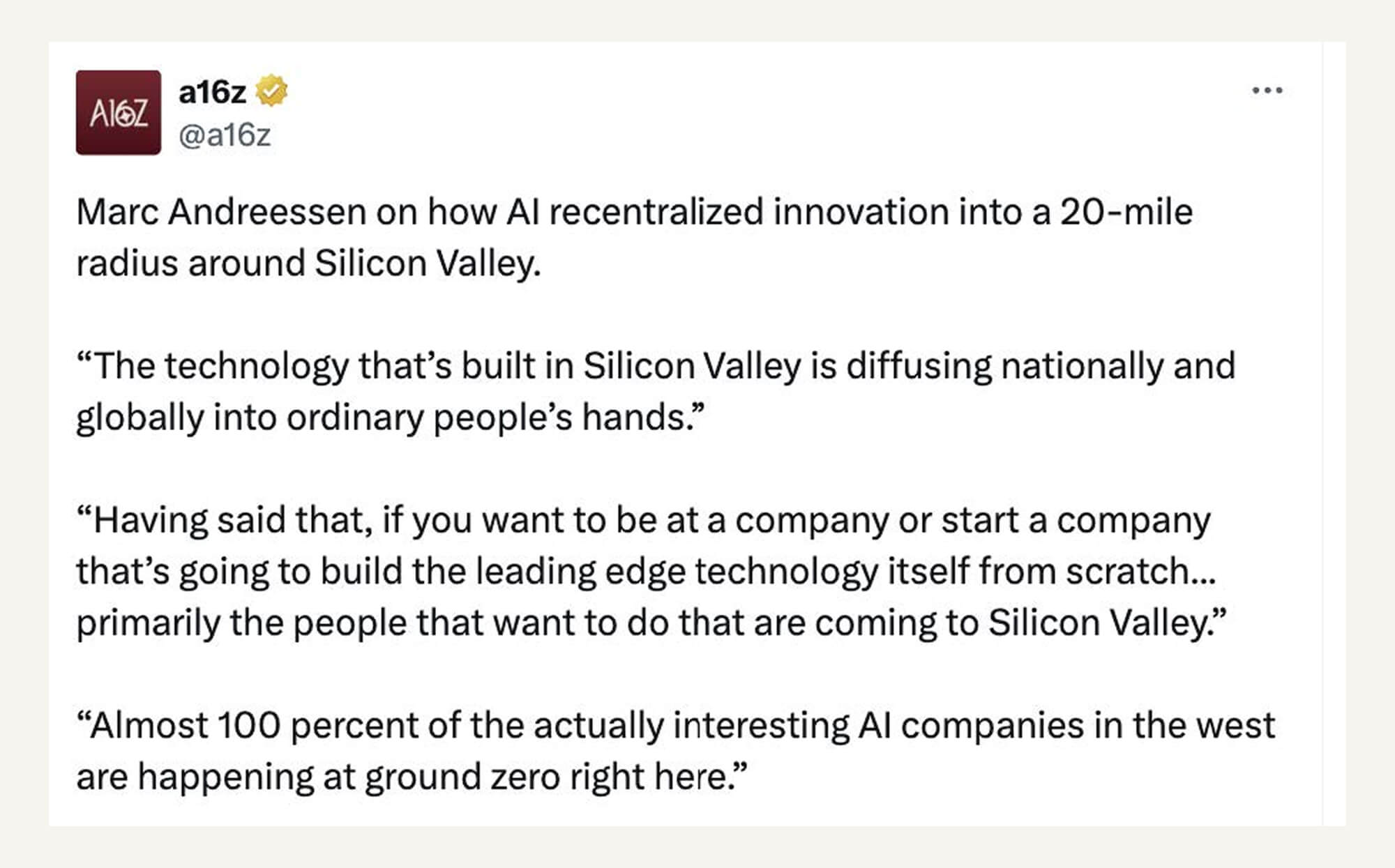
The first thing that happened is that the opportunity cost of not being in Silicon Valley went way, way back up. For every reason that the 2010s was a period of stability for product building, and where company-building best practices diffused out democratically into the world, today the exact opposite is happening:
- Tech stacks are getting completely rewritten. How you build software is back to being a really exciting question again. If you’re working on the infrastructure that’s supporting this new paradigm shift in computing, you basically have to be in SF. And even if you’re trying to build a big company on top of that infrastructure, you still have a tremendous advantage being close to the center of the action. You occasionally get exceptions like ElevenLabs, but they’re the exception.
- The ways of working are changing just as quickly as the technology is. If you are a talented person and you are deciding where to stake your career, you really don’t want to commit to building “the old way” if there’s an obviously better, faster and newer path for you to take.
For those obvious reasons, if you are a talented builder deciding whether to stay in your local city versus move to SF, it’s a very different cost-benefit equation than it used to be.
Meanwhile, and arguably more importantly:
The second thing that’s happened is that local A-player builders now have a really viable alternative to working for a local tech company, which is working for themselves. It has suddenly gotten so much easier to just start and run a one-person business, if you’re a talented product manager or developer. And so that’s what a lot of these people are doing; especially people who have established roots in the city, have kids in school and so forth, and who would’ve been the rootstock of high-calibre local talent you could count as not having to compete with SF for their attention.
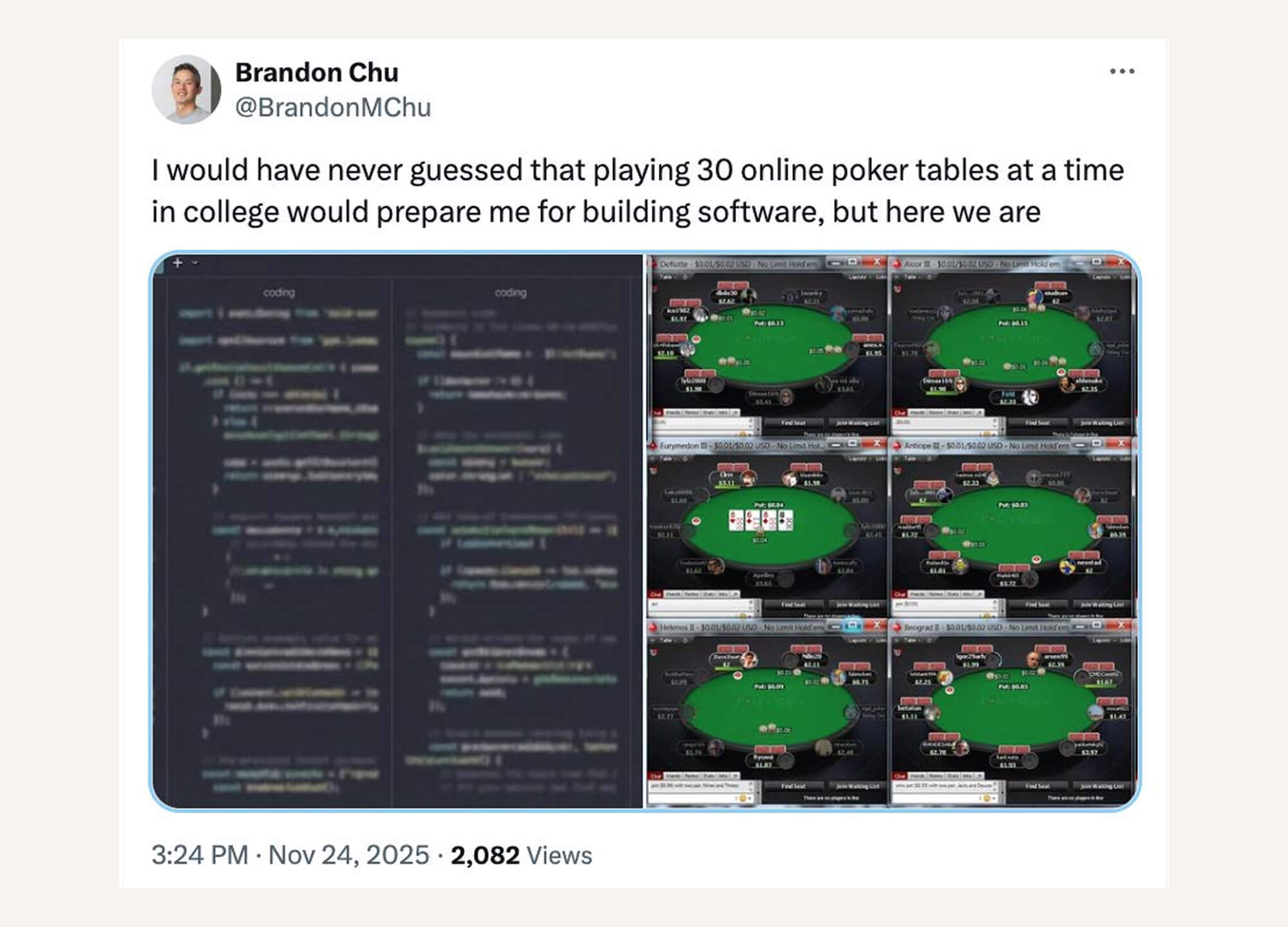
As an example to bring it home, my neighbour Brandon was a legendary product manager at Shopify, and he’s exactly the type of person who a local tech company would want to recruit in order to hit product market fit and scale. But now, a company trying to hire Brandon has to compete with him building his own businesses, and that is very tough competition:
Between these two forces – AI pulling people back into San Francisco (and Bay-Area headquartered companies, in the case that they have local offices) and AI making solo building a much more attractive proposition – there is now a much more difficult adverse selection problem in local tech scenes. There are just fewer A-players available to hire anymore.
As a result, in my observation anyway, the composition and the purpose of local tech scenes has changed pretty dramatically since a decade ago.
One important way it’s different – in some ways better and in some ways worse – is that the local A-players have fewer reasons to hang out with anybody else anymore. That was not the case a decade ago. There was a healthy mixing function back then: since the primary function of the tech scenes was preferential attachment and hiring, you would very often find great developers, designers and product people at events mixed in with people from all kinds of backgrounds. Whereas now, it feels like there are studios and spaces where the people who are really good hang out, and there’s a huge chasm between them and the incubator/mentorship industrial complex types that wasn’t the case before. The big sort finished sorting.
On the plus side, my impression from various meetups and community events happening now is that they’re still full of energy, just a different kind – that of lots of people capably doing their own thing. There’s still energy, it just isn’t hiring energy, which feels completely different from what it used to be.
The other thing that has changed is that status in these local scenes is a very different thing from what it used to be. There used to be a very legible, local status hierarchy between the local VCs, the local startups with product market fit, the evangelists who were back from the valley, and so forth. And, like in any local scene, there was all kinds of healthy competition for climbing that status ladder in a way that accrued legitimacy to local institutions, who benefited from all of that legible behaviour.
Whereas now, the main legitimacy signal is much more, “What is your connection to SF.” (Either that or, you’re solo-building your own company so you get to opt out of the social status game entirely.) I understand why this happened, but I think it’s a bit of a bummer in some ways; we’ve lost some of the “social fog of war” that makes successful tech scenes tick; or to the extent there is still that valuable ambiguity, it’s just because you don’t know yet who’s gotten accepted to YC.
My favorite current example of what tech scenes have turned into is 535 Studio in Toronto. 535 was founded by a handful of A-player ex-Shopify guys, as a local coworking space for people and events. There’s nothing radical about it as an idea; it’s just well-executed and attended by high-quality people, and it draws remarkably high-calibre guest lectures whenever it does host events:
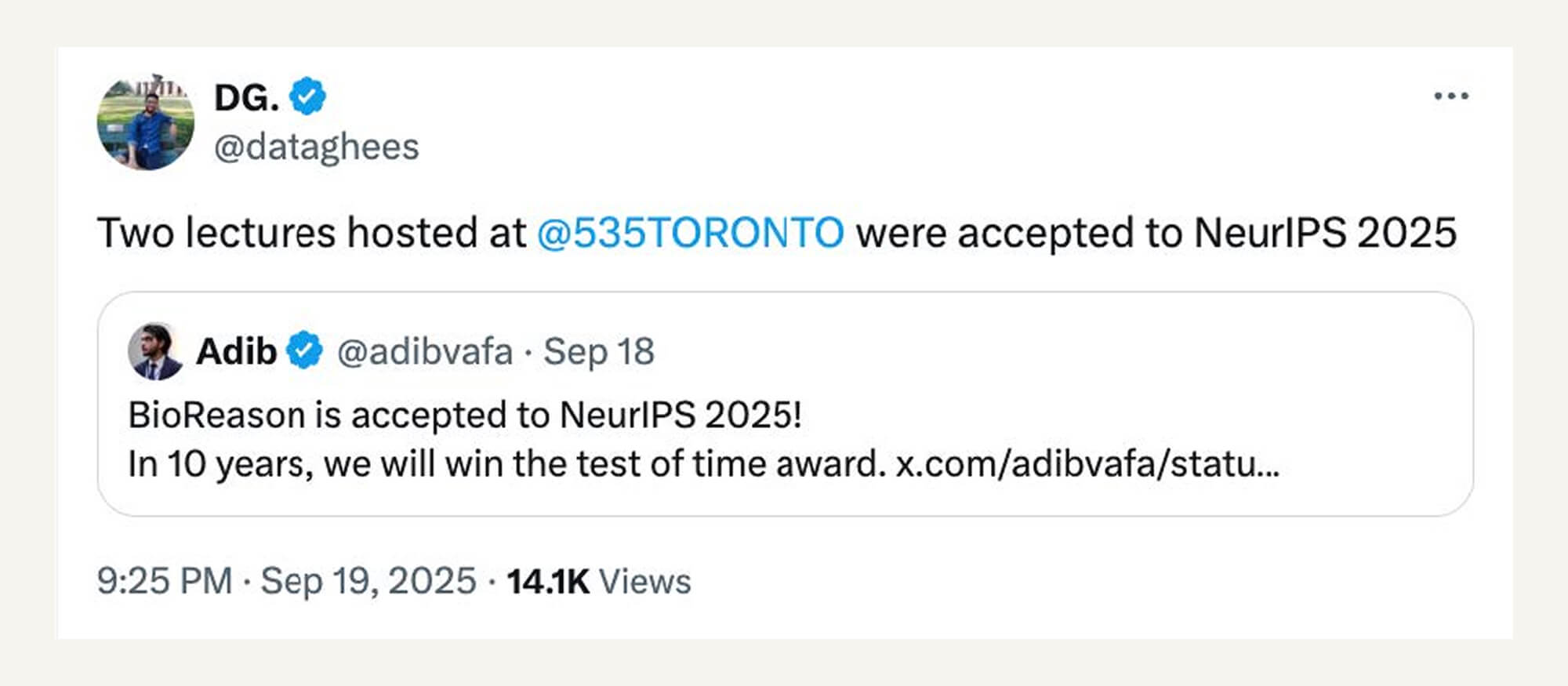
Anyway, this is the type of space that ten years ago would’ve been the place to hang out in search of a job opportunity. Connecting people to each other in order to catalyze preferential attachment would’ve been the purpose of a place like this. But today, it’s not. It’s where people like Brandon go to lock in all day and build solo businesses; still hanging out as a community, but not towards the explicit end of creating local startups built to scale. Furthermore to the point, Fahd Ananta, who’s 535’s ringleader and de-facto chief spokesman, recently got back in the ring as a builder – but for Opendoor, not for a local startup.
There, in a nutshell, is the problem that the current cohort of local startups face right now. It is simply much harder to recruit local A-list talent compared to how it used to be. It used to be that the one thing these companies had going for it was you had a relative monopoly on local talent; but now between this and remote work (however much remote hiring still happens, anyway) that advantage is long gone.
In pursuit of new defaults
Whenever you want to see where the future is headed, one of your first searches should be seeing what Balaji Srinivasan has said on the topic – he’ll get you thinking. And Balaji has been trying out an interesting line recently: “Popups are the new startups.” At first when I heard it, I kind of dismissed it: “No they’re not, the company is still the organizing entity, not whatever this thing called a ‘popup’ is.” But as I think about it more, I’m not so sure about that anymore.

Balaji’s idea, in his usual sweeping style, is describing this phenomenon in very big terms, like “What replaces the nation-state” and how tech as a global force and ideology and wealth-creator/owner is forming into a new sort of network state. How all of that shapes up is above my pay grade, but I do see something similar happening on a closer-to-the-ground level as pertains to these local startup scenes that are so critical for fostering local tech talent and creating local opportunity. The central organizing feature of these local tech scenes are decreasingly about companies. They are about people who are individually sovereign, coming together anyway for common-minded purpose, and who get something out of that emergent organization.
In the West End of Toronto, on the other side of town from 535, there’s a space called New Stadium, which has its own collection of interesting builders. They’ve been tremendously successful at getting into the psyche of the local tech industry – its founder @internetVin concocted a very funny origin story of an “East end / West end” tech rivalry, which involved a Jamaican patty getting thrown, that is now a part of the local scene canon.
Despite their recent success, they’ll readily admit that we don’t really know what the precursor ingredients to a startup is anymore. It used to be, ten years ago, that a startup was an opportunity for people to get to work in a certain way. If you were a software developer, or an aspiring product manager, working for a local startup with momentum and a mission was your ticket to work with likeminded people on meaningful projects, in a way that maximized a career path fitness function. It doesn’t feel like that’s really it anymore.
What’s emerging instead is something that’s also promising, but in a different way. A startup, now, means an opportunity to work on something by yourself that is your gift to everybody. (I guess that’s always what it’s been about. But it’s a lot more obvious now.) And that’s something where, for the first while, you’re probably going to do it on your own – because you can now, a lot more easily, with AI tools and other advantages we have now.
What this suggests to me is that there will probably be a period of a few years where the seeds of many different startups are being sown, not as people trying to make startups, but as people working on their own gifts to the world. And a handful of these projects, if you give them time, will become the next great companies; but they’ll have a different path to greatness than we saw in the past generation of tech companies. I expect to see many more companies like Shopify or Figma, who spent years getting the product right before it became a gift that the whole world was ready to receive.
The other thing that AI is doing is it’s changing how people sort themselves as they enter the tech industry. It used to be that you’d show up at local events, and there would be a proficiency test that was, could you figure out who was good, and how to attach yourself to those people, and that’s how you’d get a job at a good startup and get on your way. Now, that doesn’t exist as much anymore. It’s been replaced by this very different filter function, which is “show us your projects”. (There is obviously a precedent with OS projects and Github; now they’re just more vertically complete.) AI is now serving the role of the “local legend” who drew the good people away from the fake work, because they can just go start cool one-person companies without asking for anybody’s permission, and have a great time doing it.
But then, of course, there’s the other way you can differentiate yourself, and it’s the obvious one and always has been – it’s just to buy a one-way plane ticket to SF. And that’s what a lot of people are going to do, and it’s going to be a strong selection function. There is no sugarcoating this.
All of this suggests to me we’re likely to go through a cycle of local tech sentiment that has yet to bottom out, but also will reach a wonderful place in a few years, as this new cohort of solo founders matures to a point where a handful of them emerge as launch points for scalable businesses. I hope that the local VCs, angels, and other ecosystem players hang in there until it happens; the rewards will be great for those who stick around.