
As a recovering consultant, I’ve spent more hours than I’d like to admit nudging text boxes in PowerPoint and wrestling with think-cell charts (the first application I requested to purchase when I arrived at a16z almost 7 years ago). I still have muscle memory for PowerPoint shortcuts, the flashbacks of drawing waterfall bridges at 2 a.m., and the existential dread that comes from a client asking to “make this chart pop.”
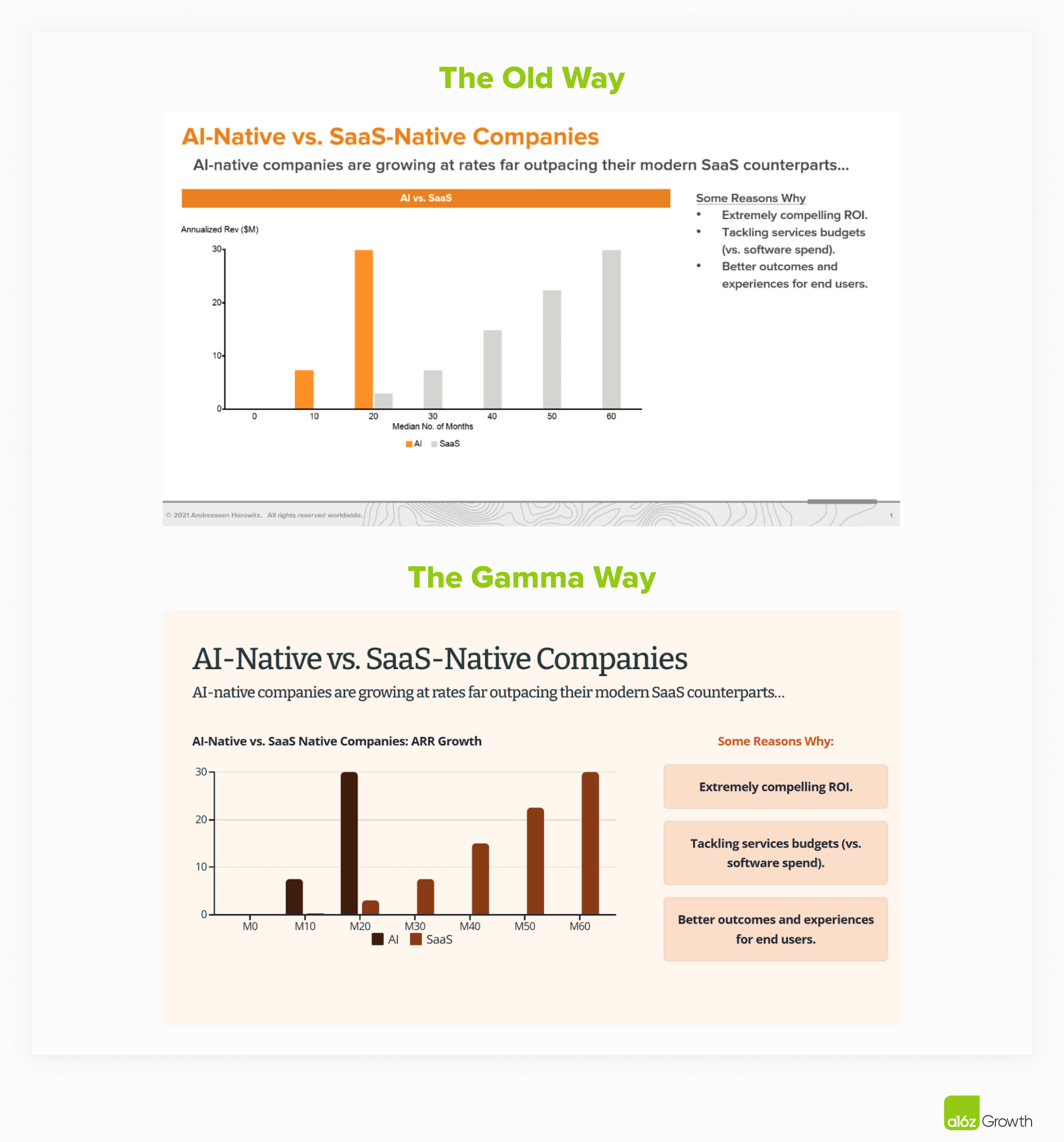
When I first tried Gamma, I had that rare feeling that something fundamental had changed in the way that I did day-to-day work. What used to take hours of sizing and formatting (and then resizing and reformatting) now took minutes. Instead of opening a new, blank deck, I opened Gamma, wrote a few sentences about what I wanted to create, and hit “generate.” In less than a minute, Gamma turned my messy doc into a beautifully designed, clearly articulated, interactive presentation. For the first time, a tool seemed to understand what I meant — not just what I typed.
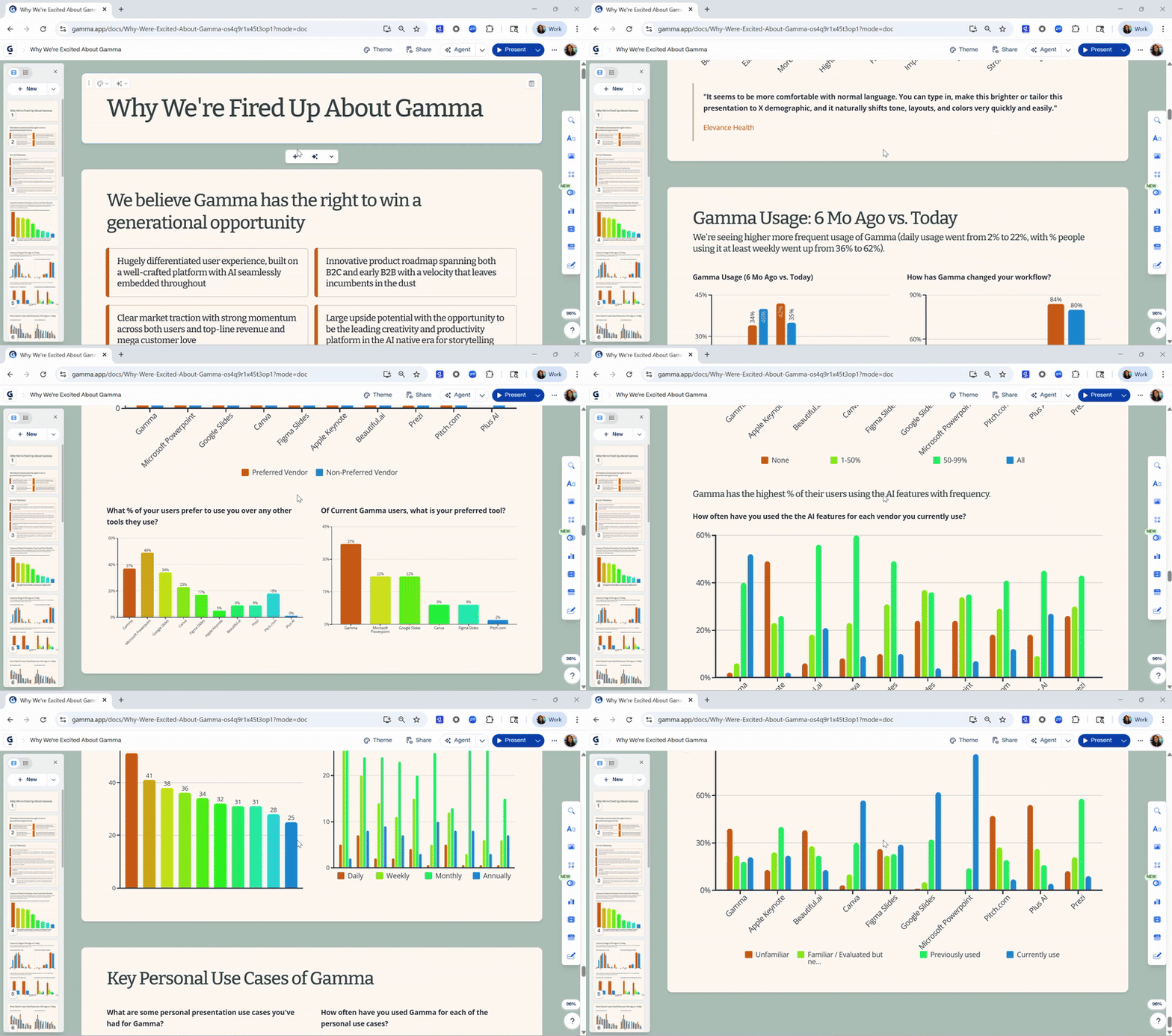
If the last decade of software was about cloud collaboration, the next decade will be about AI-native creation — tools that don’t just host your work, but co-create with you. Just as Figma redefined design, Gamma is doing the same for presentations, and more importantly, storytelling. We’re living through a transformative shift in how ideas are communicated.
The first wave of generative AI captured attention through spectacle — AI that could paint, write, or chat like a human. The next wave is about utility: embedding intelligence into everyday workflows to make us faster, clearer, and more creative. Gamma sits squarely at the center of that shift.
Despite billions of users, presentation software hasn’t evolved meaningfully since the 1980s. PowerPoint and Keynote assume we’re all designers, when in reality, most of us just want to explain an idea and quickly get buy-in from our teams. They force structure before substance, and bullets before clarity. And by doing so, they consume hours better spent thinking. As anyone who’s ever spent 30 minutes aligning boxes pixel-by-pixel (me!) can attest, the process often feels less like communicating and more like performing a design ritual. It’s no wonder we dread “making slides.”
Gamma flips that dynamic. Users start with ideas, not slides. You write naturally and the AI handles layout, hierarchy, and design, instantly. The result isn’t a static deck but a living, web-native artifact that’s instantly shareable, interactive, and beautiful by default. But what makes Gamma magical isn’t just the time savings, it’s the quality of communication it enables. Great design doesn’t just look better; it lands better. A clear, visually structured idea is more persuasive, memorable, and actionable.
While there’s no shortage of presentation software claiming to be “AI-powered,” Gamma stands out as the AI-native solution in the market. Its underlying models and design systems aren’t bolt-ons, they’re at the heart of the product experience. Users consistently describe Gamma’s AI features as the most valuable aspects of the product and the reason they chose Gamma. By combining powerful AI capabilities with design best practices that build in color, typography, space, and visual hierarchy, Gamma enables anyone, from a startup founder to a high school teacher, to express ideas with the clarity and standards of a designer.
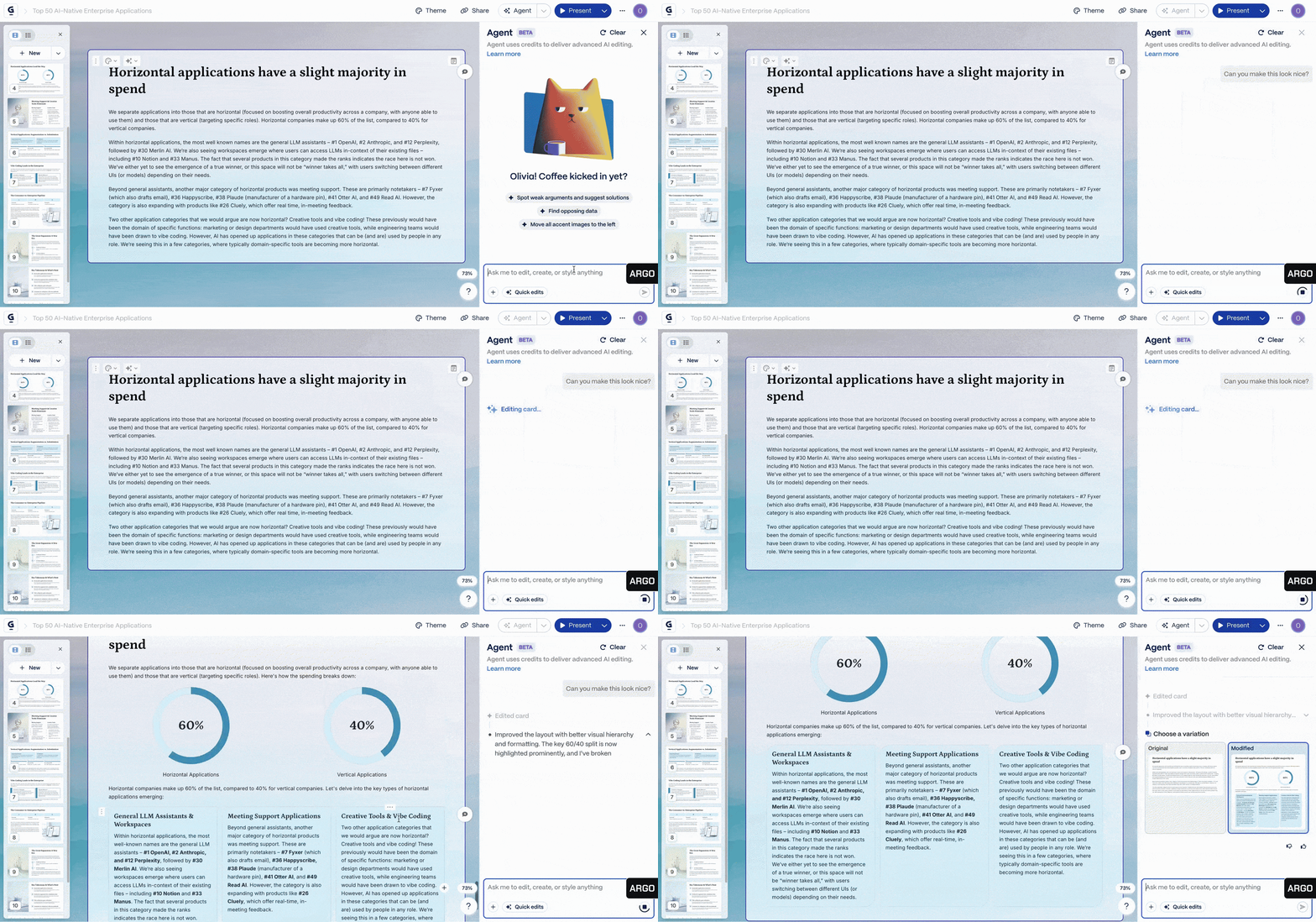
Gamma’s opportunity extends far beyond decks. Gamma isn’t simply a better and faster PowerPoint; it’s building the foundation for how knowledge, storytelling, and persuasion will happen in an AI-first world. Users on Gamma can leverage the same flexible and intuitive UI to make websites, documents, and social posts, with more to come. Gamma’s API enables users to connect Gamma to all their other tools to create and automate engaging and delightful visualizations and presentations. We’re seeing users already automatically creating things for clients, plugging in CRM or spreadsheet triggers to generate branded decks, reports, or websites at scale. As Gamma continues to push the envelope on product, the medium through which we communicate ideas becomes more dynamic, integrated, and software-like. We believe the democratization of storytelling will lead to an explosion of ideas communicated, in the same way that AI coding has enabled non-developers to make software.
And it’s no surprise that Gamma’s momentum has been entirely product-led to date given the magical product experience. Since launch, over 70 million users have adopted Gamma to create and share everything from startup pitches, sales decks, and classroom lessons to personal offsite agendas, travel itineraries, and fitness trackers. Because Gamma’s decks are web-native, they spread organically through link-sharing rather than file attachments, creating a viral loop that drives adoption across organizations and teams. This kind of sustained, organic growth to the scale of over $100M ARR while profitable is insanely rare — and it speaks to both the depth of the product and the resonance of the problem it solves.
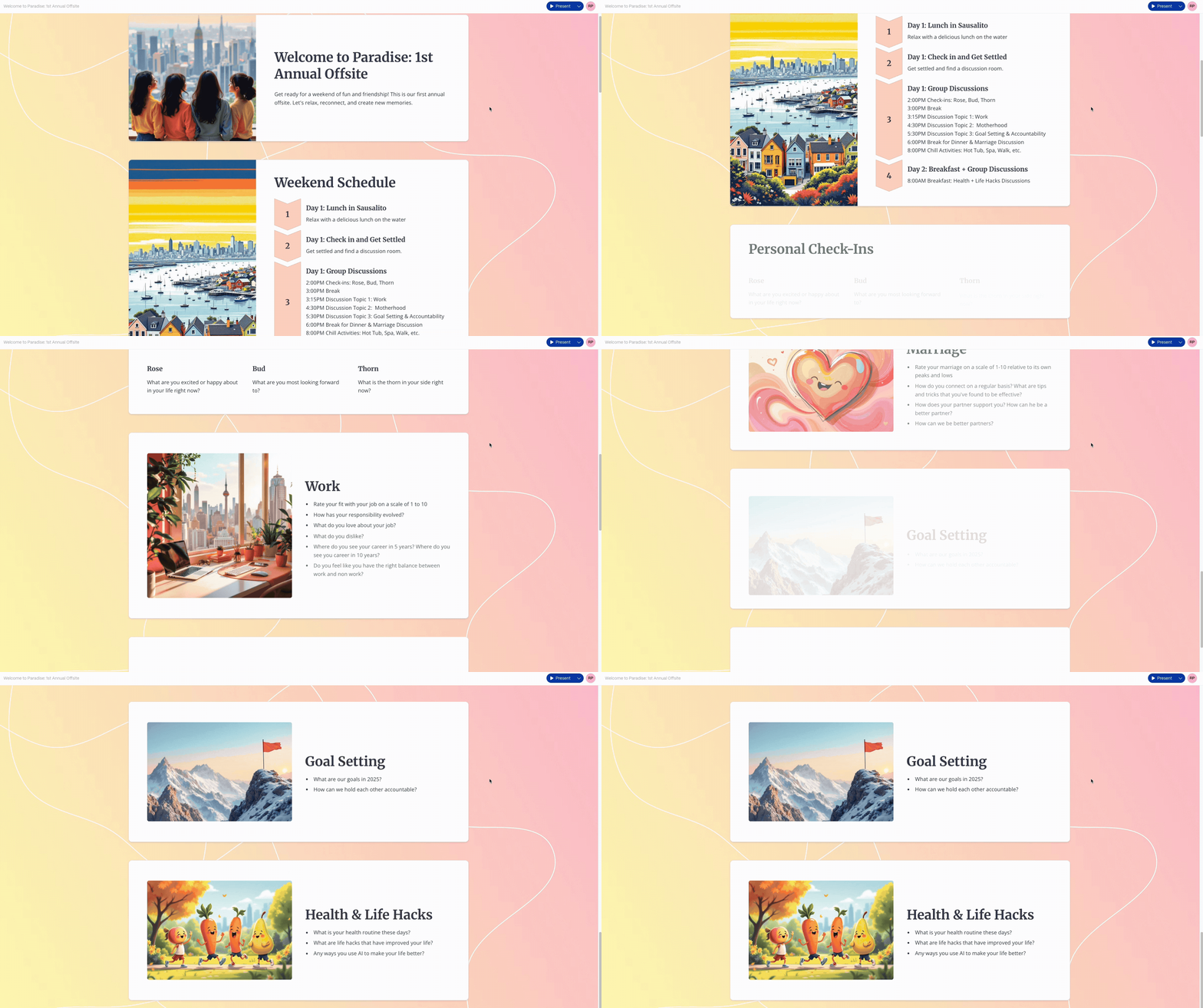
Annual Offsite with College Besties Powered by Gamma
Reimagining something as entrenched as PowerPoint takes a rare blend of ambition, product obsession, and unparalleled design taste. Gamma’s founders — Grant Lee, Jon Noronha, and James Fox — embody all three. Grant, Jon and James met at Optimizely where their focus on experimentation shaped their philosophy on product and company building. It’s no coincidence that Gamma is anchored on relentless iteration, a community-centric culture, and disciplined and sustainable growth.
It also takes a sense of humor, which they have in spades. From the very beginning of their journey, they’ve understood how personal the relationship is between people and their slides, to occasionally silly or sublime ends. Their genuine love of the medium and their relentlessly optimistic iteration are why they’ve succeeded in building such a personal product for so many people.
We believe the next generation of iconic software companies will be AI-native apps and that visual storytelling is one of the most powerful ways to drive understanding and influence. We’re thrilled to announce that a16z is investing in Gamma, as they transform how we share ideas and tell stories.
And if you want to join this incredible team, Gamma is hiring!

- Your Favorite Creator Isn’t Real—Does it Matter? Olivia Moore
- Cursor + SpaceXAI: the fastest iterating team wins Sarah Wang, Matt Bornstein, and Martin Casado
- How Enterprise AI Really Gets Deployed Jesse Zhang, Ashwin Sreenivas, Sarah Wang, and Kimberly Tan
- AI for America’s Small Businesses | Lassie Frédéric Renken, Steijn Pelle, Alex Rampell, and Olivia Moore
- How to Win the Largest Market in AI Raghu Raghuram and Sarah Wang

- Your Favorite Creator Isn’t Real—Does it Matter? Olivia Moore
- Cursor + SpaceXAI: the fastest iterating team wins Sarah Wang, Matt Bornstein, and Martin Casado
- How Enterprise AI Really Gets Deployed Jesse Zhang, Ashwin Sreenivas, Sarah Wang, and Kimberly Tan
- AI for America’s Small Businesses | Lassie Frédéric Renken, Steijn Pelle, Alex Rampell, and Olivia Moore
- How to Win the Largest Market in AI Raghu Raghuram and Sarah Wang

- Your Favorite Creator Isn’t Real—Does it Matter? Olivia Moore
- Cursor + SpaceXAI: the fastest iterating team wins Sarah Wang, Matt Bornstein, and Martin Casado
- How Enterprise AI Really Gets Deployed Jesse Zhang, Ashwin Sreenivas, Sarah Wang, and Kimberly Tan
- AI for America’s Small Businesses | Lassie Frédéric Renken, Steijn Pelle, Alex Rampell, and Olivia Moore
- How to Win the Largest Market in AI Raghu Raghuram and Sarah Wang