Eli Lilly is worth more than a trillion dollars. There are more than 300 drugs globally projected to generate over $1B each in annual sales (“blockbuster” drugs). Meanwhile, developing a successful drug can take more than a decade, and most drug candidates fail (<10% of drugs that begin human clinical trials are ultimately approved for patients). What if we could change that?
We’ve been investing at the intersection of technology and biology since 2015, backing companies like insitro, Formation Bio, BigHat Bio, and 75+ more life sciences startups. Recent advances in AI give us new reasons to be excited about a market we’ve long believed in.
Pharma has unusual economics – it’s a hits business in drug development and an annuity business once a drug succeeds. AI could change both by improving the odds of success and simultaneously decreasing development time and cost. But why now? For decades, R&D productivity has declined, with fewer drugs getting approved per dollar spent, but the tide may finally be turning. AI models for science are getting better, fast. This is opening up opportunities for companies selling software, models, and data to pharma – but will also create a wave of AI-native companies who are developing their own drugs.
Beyond the market opportunity, there’s a massive human one. There are still so many diseases we don’t understand, much less know how to treat. We firmly believe AI will help change that.
1. WHY PHARMA IS SO VALUABLE
Pharmaceutical companies are among the largest, most profitable, and most strategically important businesses in the world. The top 30 pharma companies represent roughly $5T of market cap. For context, there are 9 publicly traded pharma companies worth over $200B, similar in magnitude to software companies, where there are 16 public companies in the same size bracket.
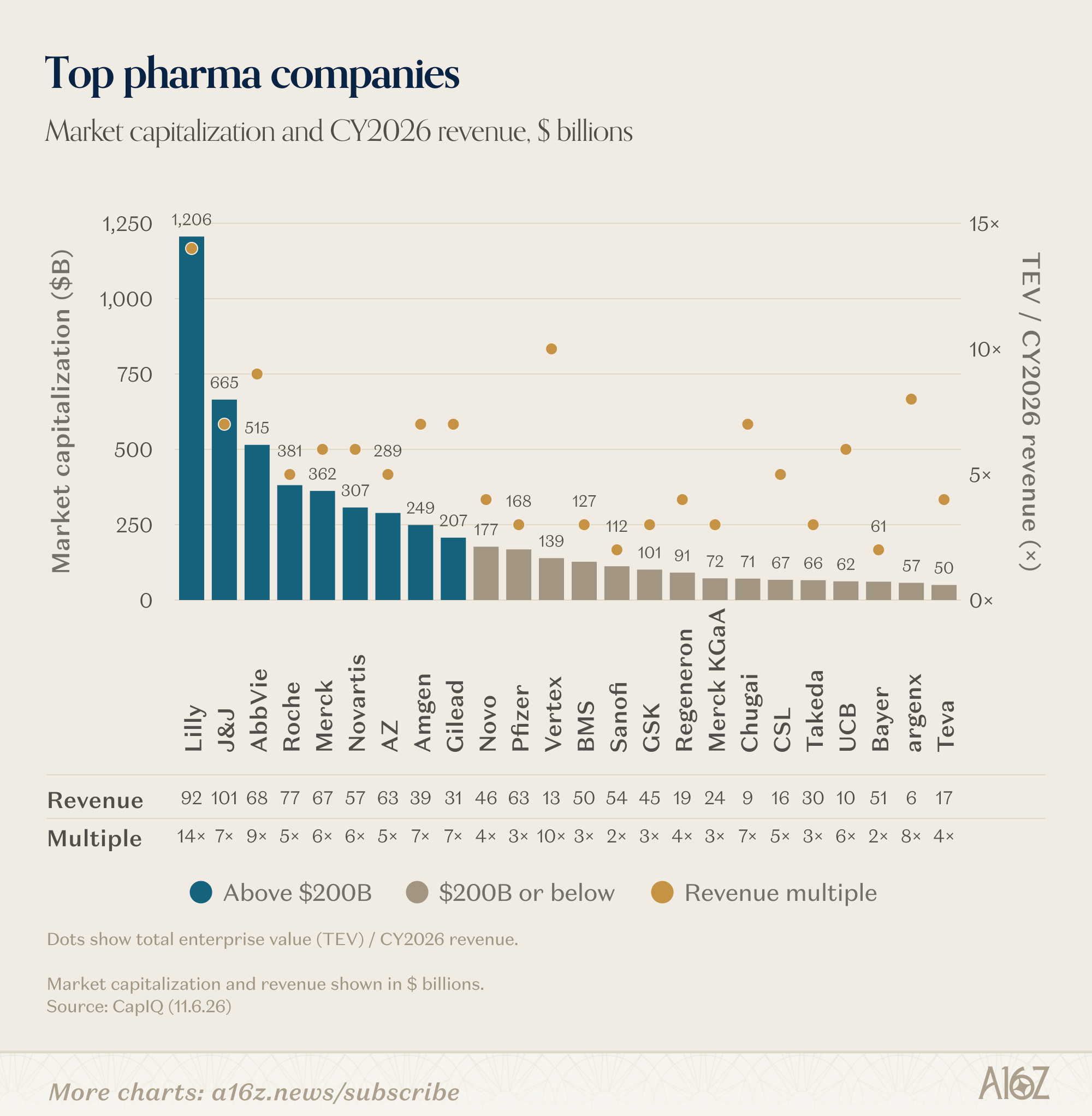
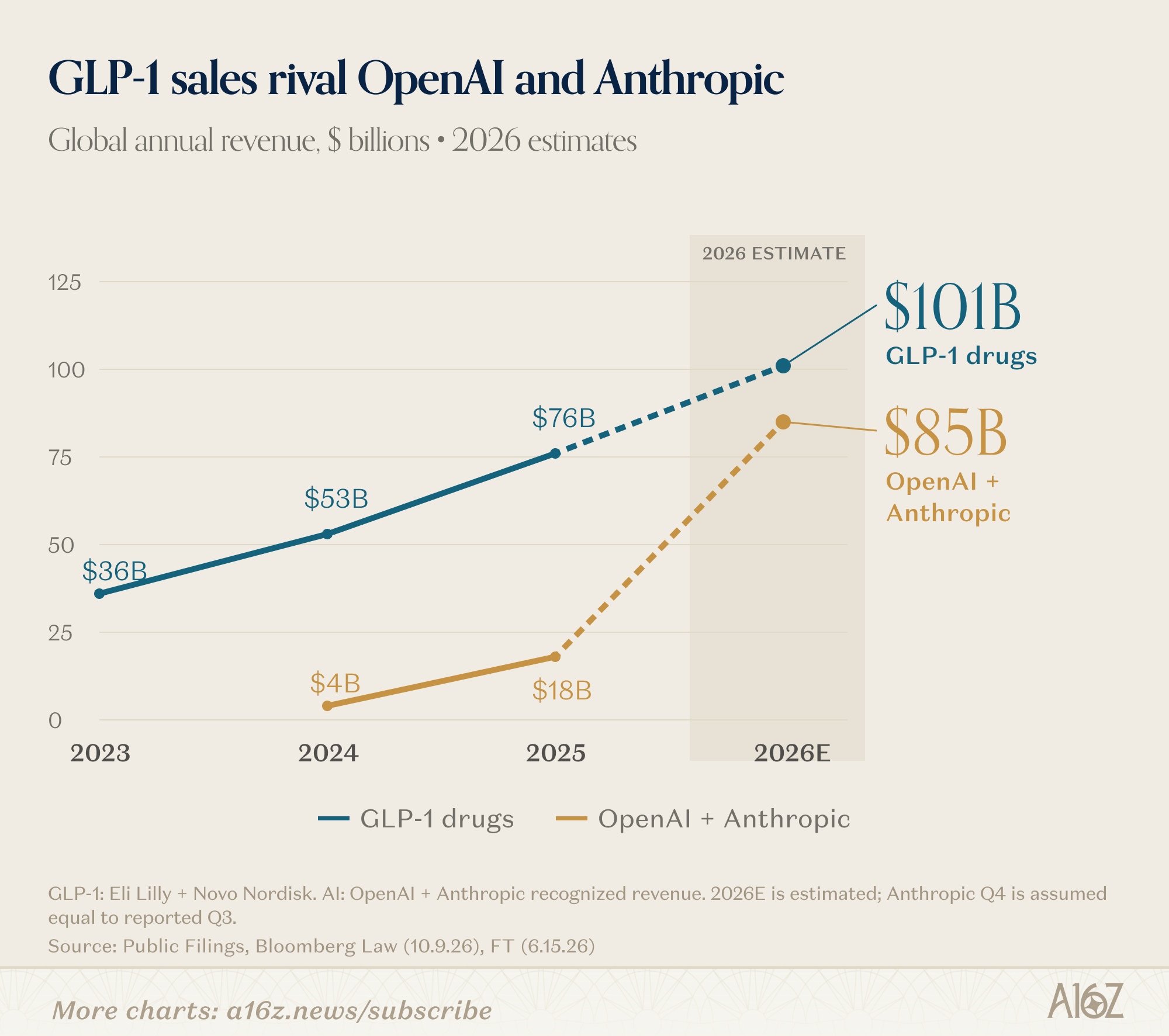
Eli Lilly alone has a market capitalization of over $1T, putting it in a club historically dominated by tech darlings. There are ~16 companies in the trillion-dollar club, primarily tech, infrastructure, and frontier giants. Lilly joined this group after its successful launch of tirzepatide, among the key drugs in the now widely known GLP-1+ class. In Q3 2026 alone, Lilly’s GLP-1 portfolio did close to $17B, nearly matching Anthropic’s revenue in that quarter. Analysts expect Lilly’s GLP-1 portfolio to grow to over $100B annual sales by 2030.
There is a duality to pharma economics: It is a hits business in drug development and an annuity business once a drug succeeds and is approved.
Pharma Is A Hits Business
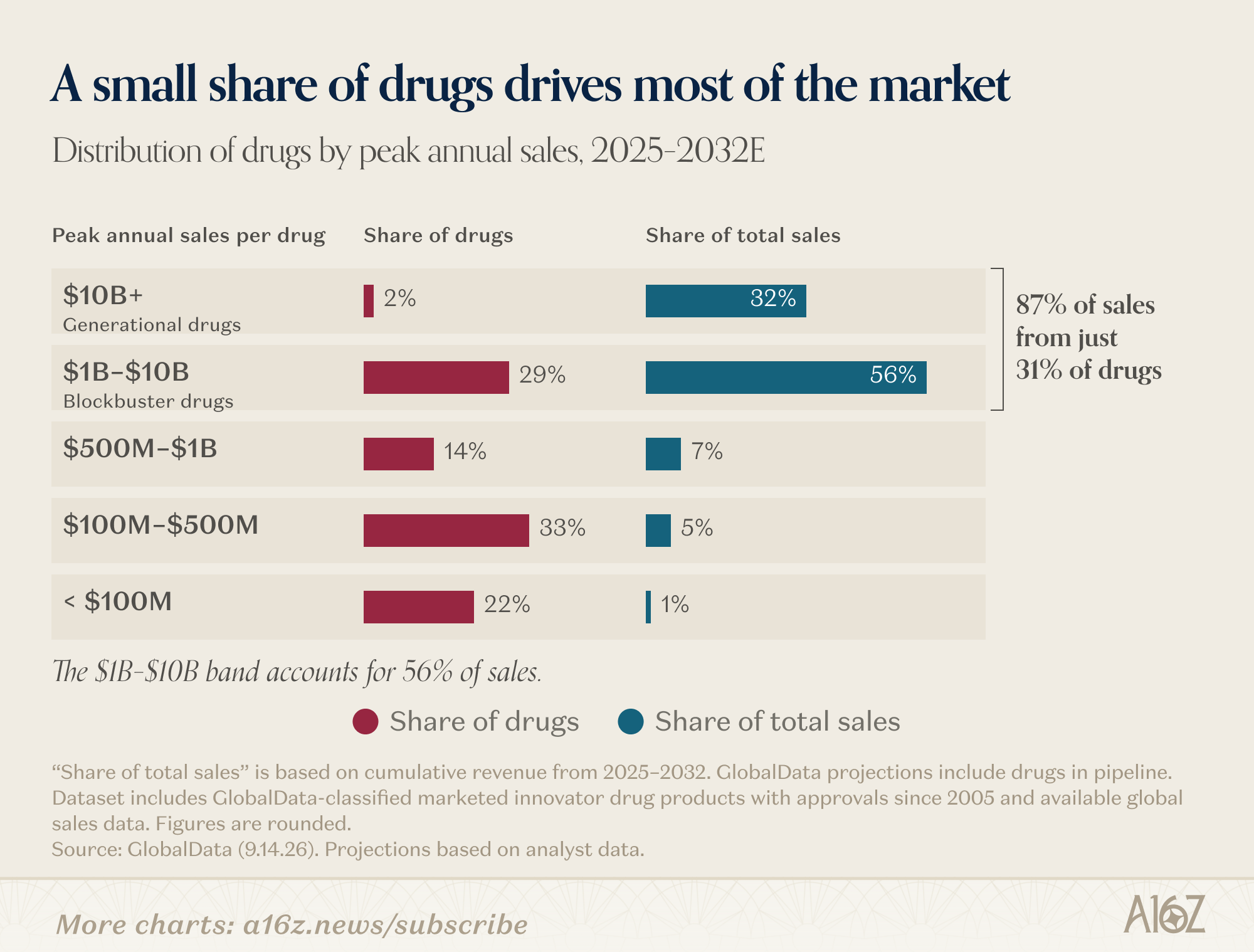
The largest outcomes in pharma are concentrated in a handful of top-selling drugs. Drug revenues follow something close to a power-law distribution, with the top 25% of drugs generating ~85% of revenues.
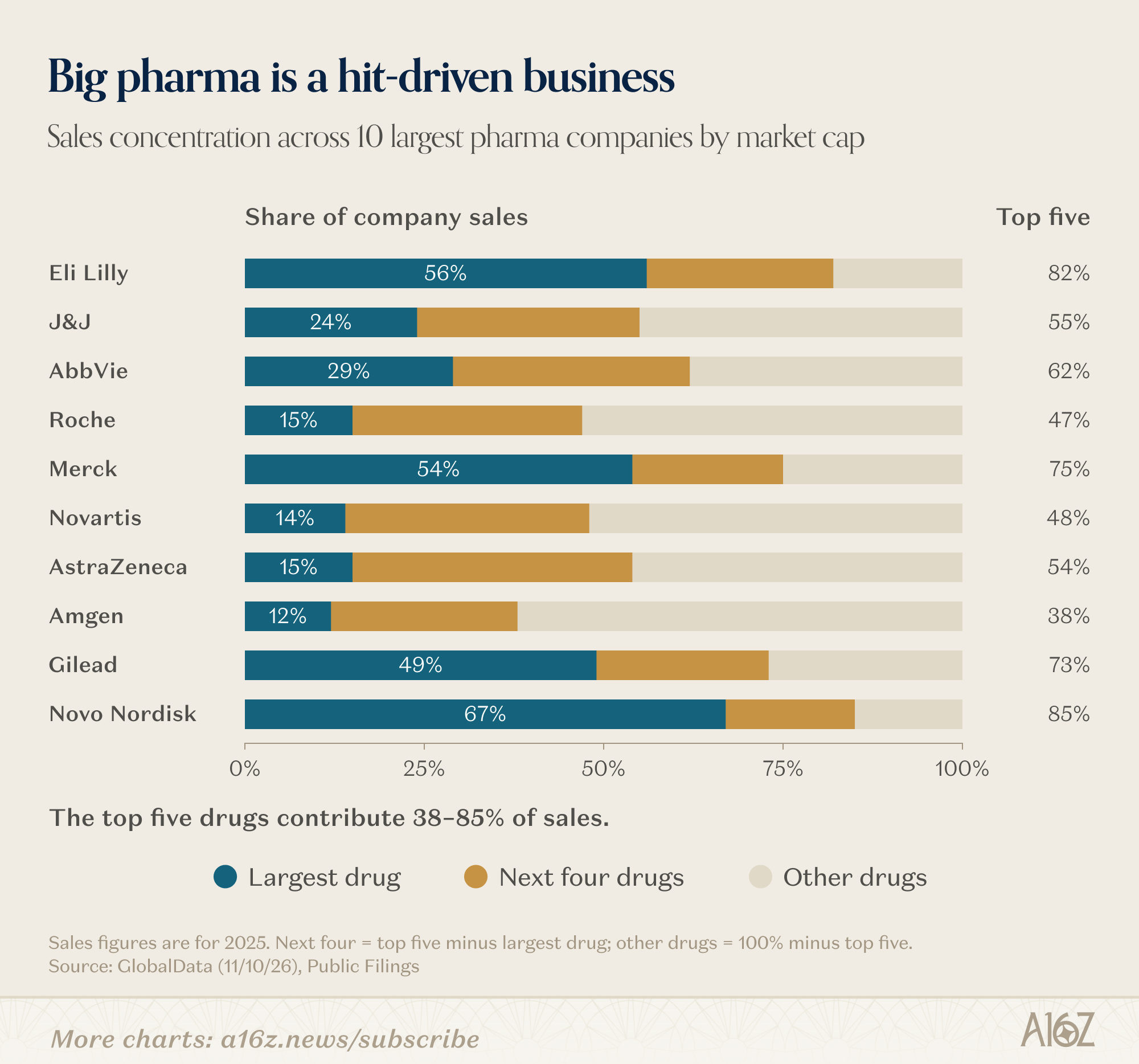
For the top 10 pharma companies, roughly 50% of revenues come from the top 3 assets in their portfolio. 63% of Lilly’s revenue came from its GLP portfolio in 2025. For Merck, 54% of revenues in 2025 came from the single cancer immunotherapy drug Keytruda. Given their resource constraints, smaller biotech and pharma companies tend to have even more concentration around a few drugs.
Drugs Are Valuable Annuities
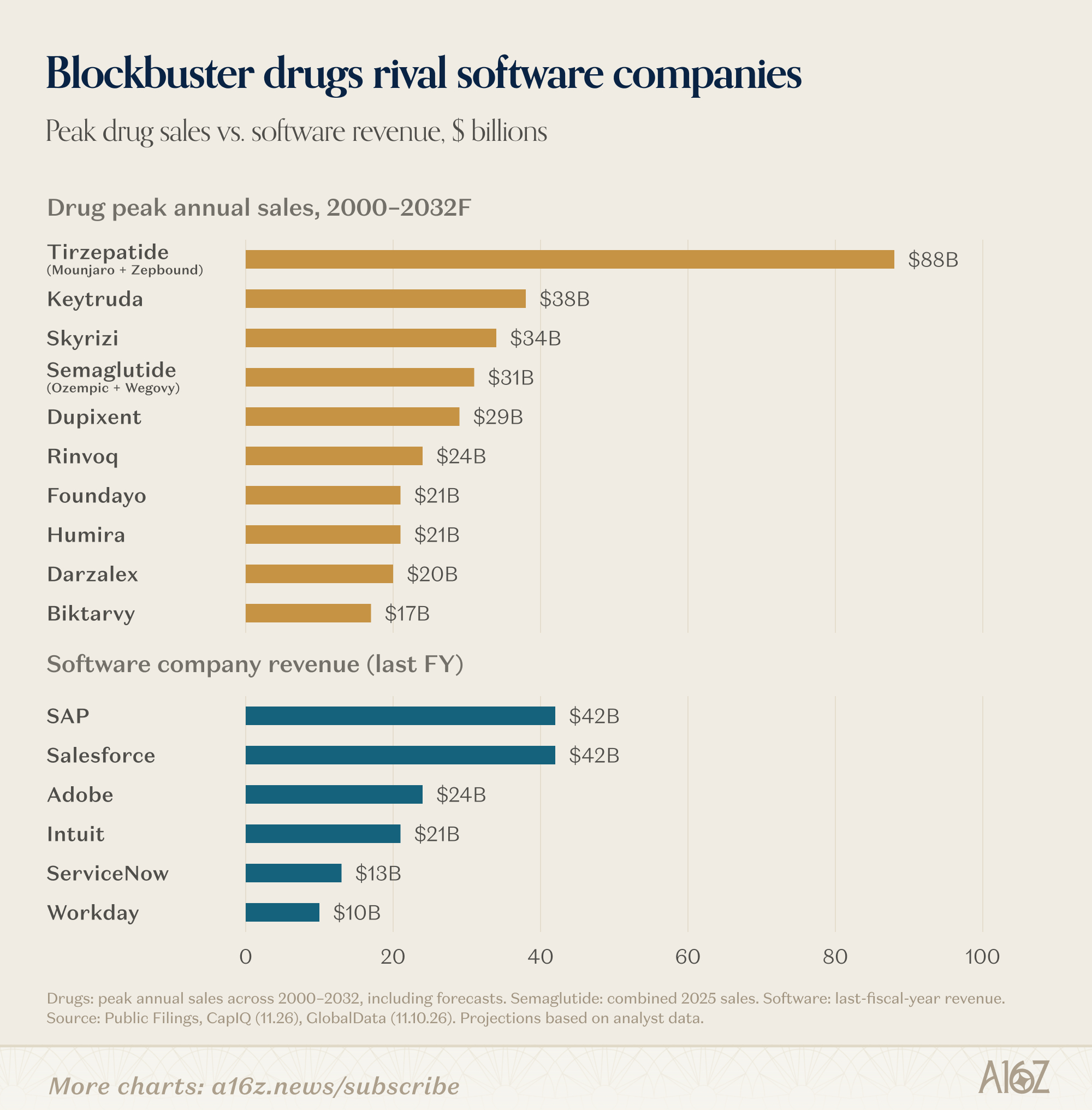
The market for drugs is deep and diversified, and the size of the prize is huge if you get it right. Annual revenue of the most successful drugs rivals that of some of the largest software companies.
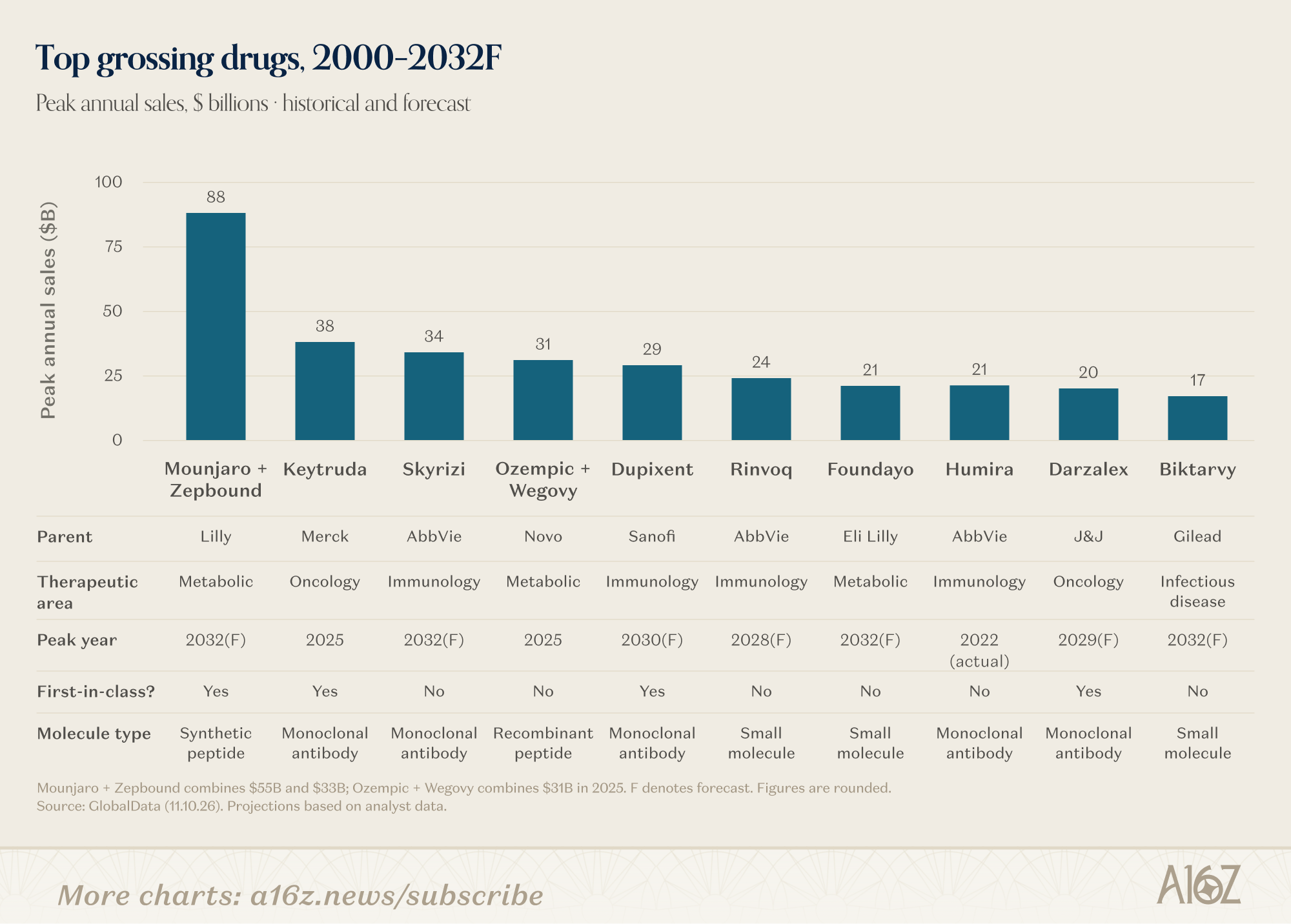
There are a few generational drugs – for example, GLP-1 receptor agonists and biologics like Skyrizi, Keytruda, and Dupixent – that will generate $30B+ in annual peak sales. Eli Lilly’s injectable GLP-1 portfolio (Mounjaro and Zepbound) did nearly $40B in sales in 2025, roughly matching software giant Salesforce’s revenue over the same time frame.
The most successful drugs retain their market leadership for years on end due to patent protection. A drug usually gets 20 years of patent exclusivity after filing for a patent prior to entering the clinic. This means a typical drug has 10-14 years of exclusivity after commercial launch, and ramps to peak sales in an average of 6 years post commercial launch. Top drugs break this mold: Dupixent, the canonical immunology “pipeline in a single product” drug, was launched in 2017, sales exceeded $2B in 2019, and drove nearly $18B in sales in 2025, with serial indication expansion to more diseases continuing to drive sales up year-over-year. The drug’s patent expiration date is expected in 2031 in the U.S., creating a decade-plus of growing, patent-protected cash flow.
Beyond these “modelbusters”, there are a larger number of drugs that the industry refers to as “blockbuster drugs,” which each drive >$1B in annual peak sales. Drugs that will generate $1-10B in peak annual sales represent 29% of all branded drugs on the market today (~300 drugs based on current peak sales predictions). There are ~190 public software companies with revenue in this same range.
How Novel Drugs Create Value
The 3 largest therapeutic categories, based on pharmaceutical sales today, are oncology (30% of global drug sales), metabolic disorders (18%, including GLP-1s), and immunology (11%). But many diseases still go untreated today.
Broadly speaking, there are two ways to create meaningful value with novel drugs:
- “First-in-class” drugs that have a novel mechanism of action (e.g., the first approved therapy to hit a given target or pathway, sometimes to treat a previously untreatable disease).
- “Best-in-class” drugs that improve on existing mechanisms of action but offer better efficacy, safety, dosing convenience, or durability than prior entrants.
There are large winners in both categories (Keytruda was first-in-class in the U.S. PD-1 immunotherapy market, and Skyrizi was best-in-class despite being third to market in the IL-23 category – both hit over $30B in peak sales and are the dominant category leaders). We’re excited about the next generation of biotech leaders pursuing either or both approaches: pioneering entirely new classes of medicines, and making the current standard of care better.
In addition to the market context (first-in-class vs best-in-class), the drug market is often sliced by type of molecule (the ‘modality’ of a drug).
- Biologics (largely antibodies, peptides, mRNA therapeutics, cell therapies, and more) account for 42% of global pharmaceutical revenue and include therapies derived from biological sources like Humira and Keytruda, insulin, injectable GLP-1s, and cell therapies like CAR-T products. Most biologic drugs today are delivered as injections and infusions.
- Small molecule drugs, on the other hand, account for 43% of global pharmaceutical revenue and include chemically synthesized compounds like aspirin, statins, antibiotics, and breakthrough cancer medicines like Revolution Medicines’ pan-RAS(ON) inhibitor Rasonque. Most small molecule medicines are taken orally.
Across all drug categories, AI will undoubtedly play a lead role in the industry’s success over coming years. New AI models of human biology could identify novel disease targets and glean insights from generalizing far outside of the training data set of previously known drugs. And with respect to molecular design, AI models trained on proprietary datasets are helping us find structures which are likely to be safer, more potent, and more creatively designed to meet patient needs.
Combined with AI-led efficiencies in clinical trials and commercial distribution, this could change the economics of the entire pharma market, and allow companies to take more “shots on goal”, increasing the odds that novel therapies succeed in the clinic, and ultimately reach patients.
2. HOW AI COULD CHANGE DRUG ECONOMICS
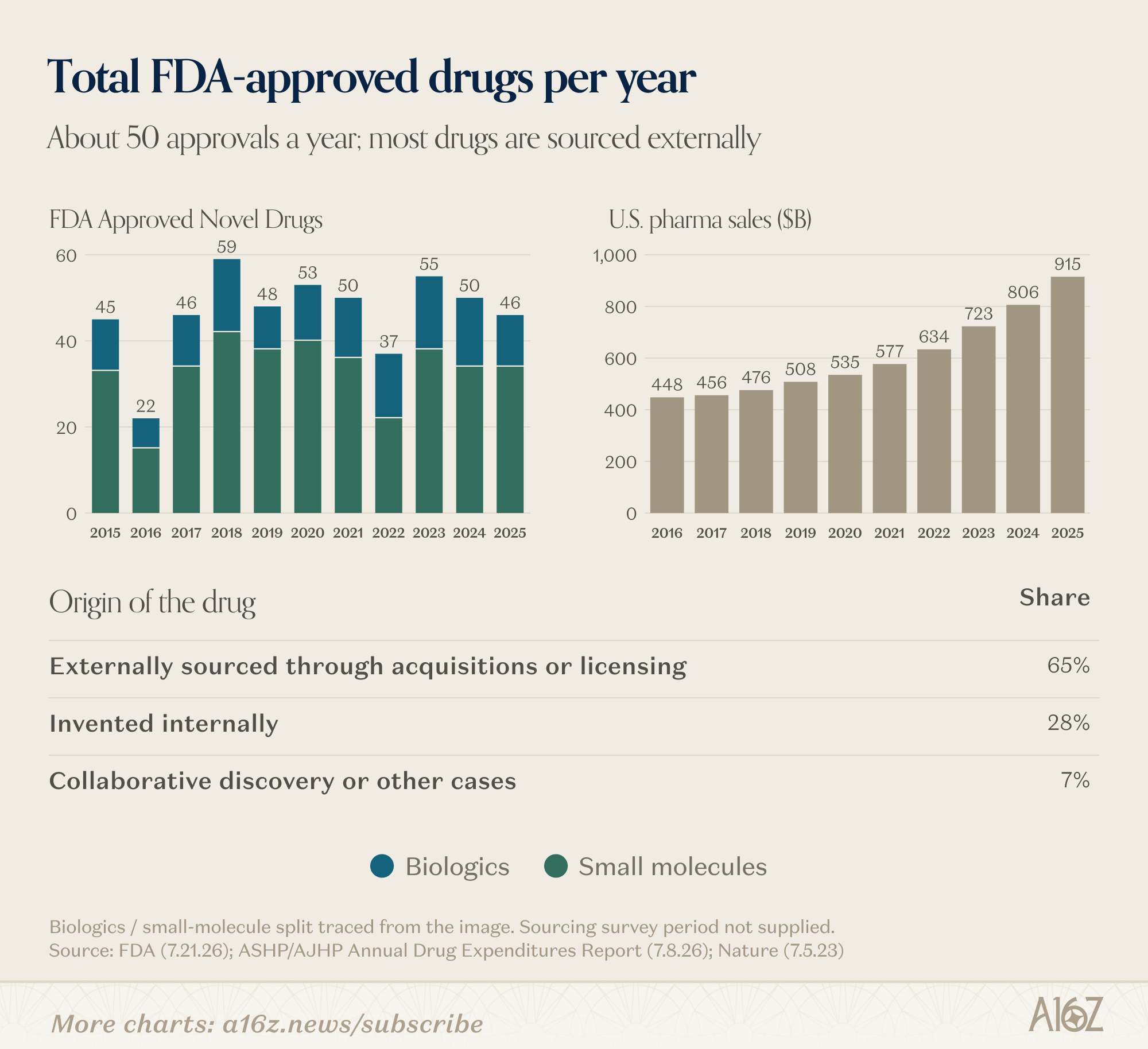
U.S. prescription drug spending has more than doubled over the past decade, but the FDA still approves only about 40-50 novel drugs each year. Much of the innovation from large pharma comes from outside, with ~two-thirds of new drugs sourced via acquisitions or licensing.
Internal drug development has historically been expensive, lengthy, and uncertain, with rising R&D investment often failing to translate into proportional gains in new drug approvals. Every promising molecule identified has to survive years of animal studies, clinical trials, and regulatory review before it can become an approved treatment available to patients, with only a tiny fraction (<5%) moving from drug candidate to FDA approval. Amortizing the cost of failed drugs across stages, the present value (PV) cost of developing a drug is close to $2B and takes 13 years on average, with rising clinical trial costs putting further pressure on R&D productivity.
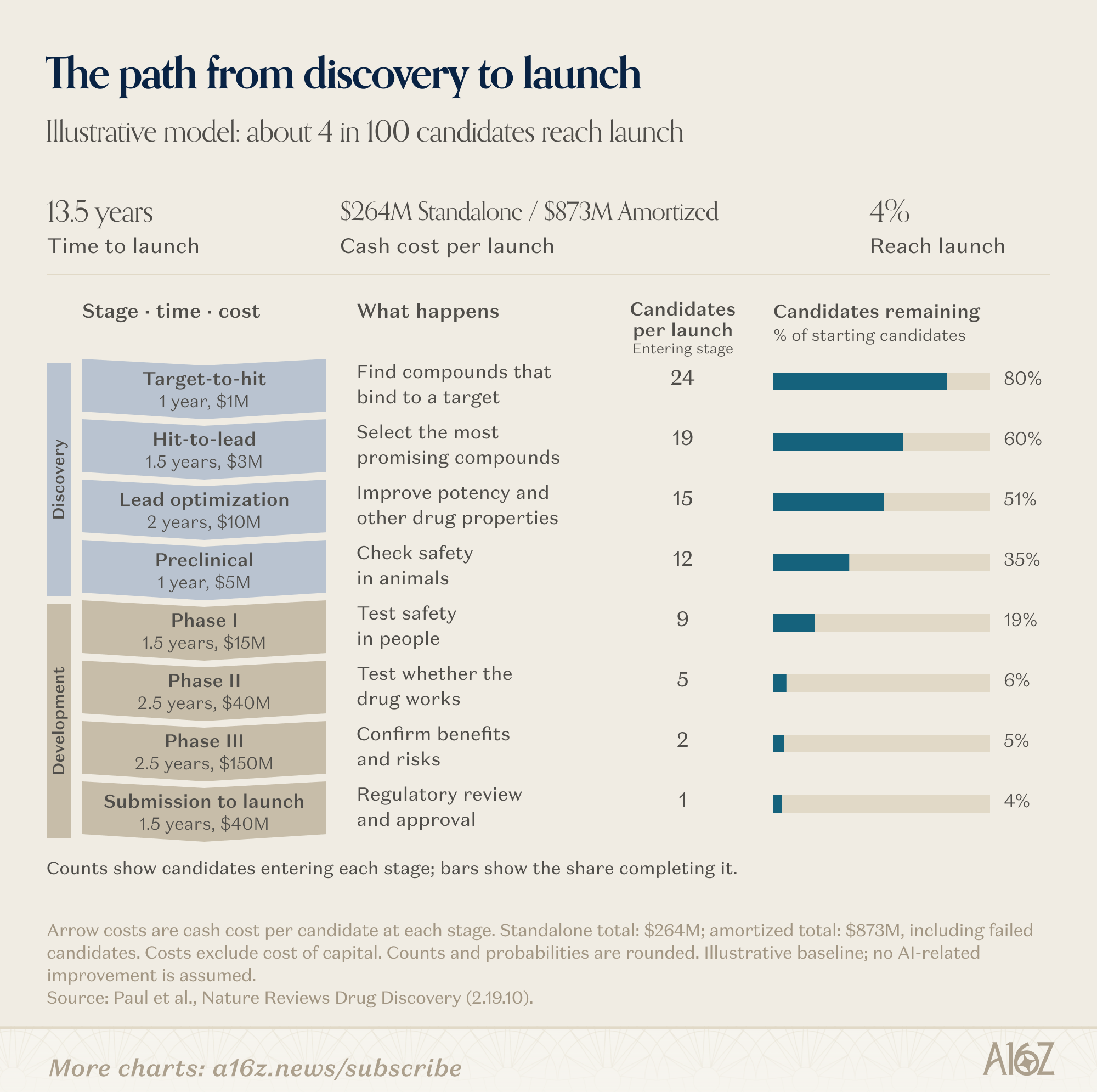
As the team at Formation Bio has predicted, we are likely heading into an era of drug candidate abundance. We see opportunities to leverage AI for faster and better processes at each step of the discovery and development process from target identification to market launch. These may include reasoning across existing academic literature to help pick and assess drug targets, leveraging predictive in silico models to prioritize molecules more likely to succeed, designing study protocols for clinical trials, improving patient recruitment, and speeding up document drafting for FDA submissions. While some timelines are heavily regulated by the FDA (e.g., long-term chronic toxicology studies), we expect to see lots of time and cost saving opportunities around many of these steps.
Moving a drug through the pipeline requires extensive real-world validation data. Today, many pharma companies work with Contract Research Organizations (CROs) to generate experimental data to validate and optimize their drug candidates and process high volume clinical trial samples. The global CRO market is $90B today, with $30B spent in discovery & preclinical R&D and $60B in clinical trials. We expect wet lab demand to explode as generating drug candidates becomes faster, and AI labs seek more data on which to train their models. We see an opportunity for a new crop of data providers and robotic lab automation companies to play a big role in meeting this demand.
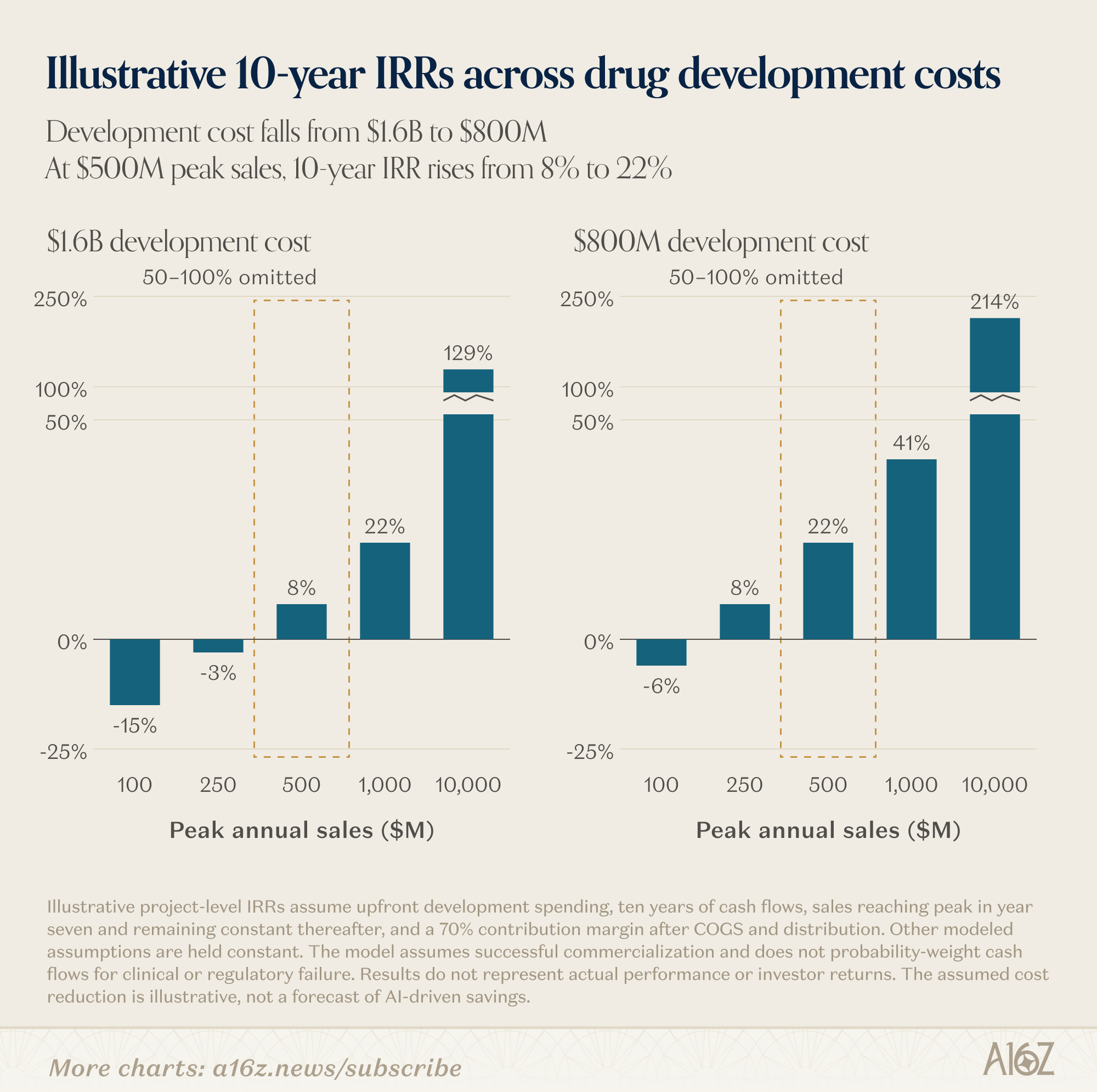
AI could reduce the present-value cost to develop a drug in two main ways:
- increasing the probability of success
- decreasing the time to approval
Together, these improvements could significantly reduce the risk-adjusted cost of developing a successful medicine. In some cases, this may enable companies to pursue therapeutic targets and indications that might otherwise have been uneconomical. It could also make AI-native therapeutic businesses structurally more profitable, with higher returns on invested R&D capital.
How Pharma Companies Are Valued
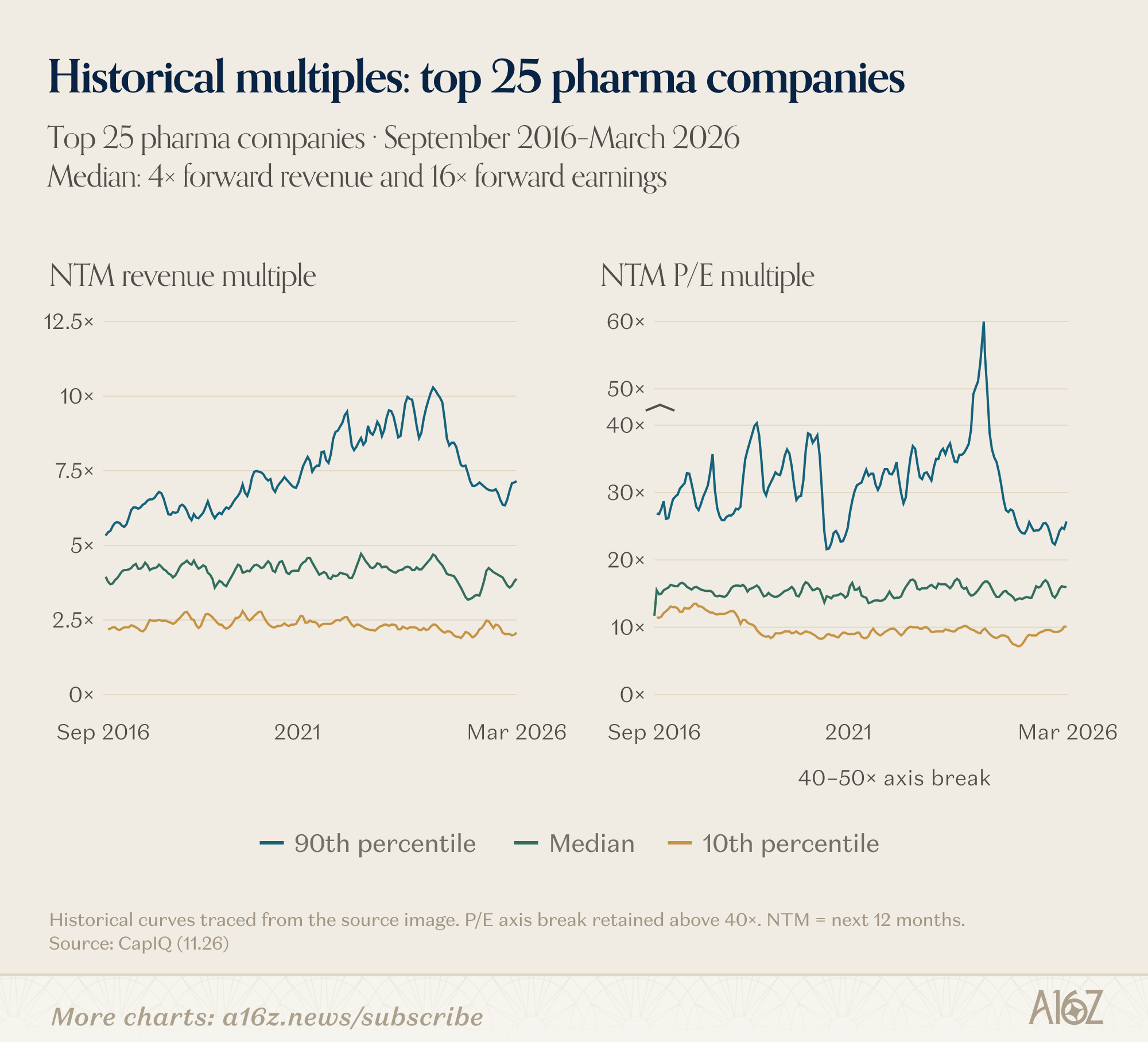
The valuation framework for large pharma companies is typically a discounted cash flow (DCF) on the mature drug portfolio (e.g., valuing the business on its expected future cash flows from forecastable drug sales), specifically approved drugs and those which have passed Phase 2 clinical trials. The simple shorthand for how valuations are done is a P/E multiple on forward earnings (often multiple years forward) with a probability-weighted adjustment for drugs still in clinical trials.
Typically, companies receive a P/E multiple of 8-20x, based on the remaining years of cash flow and exclusivity for each drug in their portfolio. This translates to 3-7x revenue with net income ranging from 20% to 40% of revenue.
Pharma companies typically don’t get much “credit” for their drug discovery engine.
Software businesses monetize their platform directly with a recurring subscription model that often realizes expansion by stacking new products and features on top of existing ones, leading to durable growth and terminal value. In contrast, given the long development times and lack of visibility for analysts, long-dated drugs in development are typically a rounding error on a PV basis. Moreover, pharma companies need to continuously replace the existing revenue base of drugs as they come off patent. For example, Humira revenue at AbbVie dropped from $20B in 2022 to $4B in 2025 after the loss of exclusivity (LOE) on the drug’s core patents. This has historically been a driving force behind large pharma’s acquisitive nature, as replenishing the asset pipeline is critical to minimize revenue volatility.
If drug discovery becomes more repeatable, investors may begin to more directly value the strength of a pharma company’s discovery engine – enabling it to earn more “valuation credit”. We can envision a future state of the industry in which, more akin to the tech sector, investors are willing to bet that a pharma company’s AI infrastructure will help it consistently develop new drugs to replace revenue lost to patent cliffs, and reduce dependence on single drug franchises. In turn, this growing investment by pharma companies in their infrastructure layer could transform their business model quality by enabling faster, more predictable, and more durable growth.
Recognizing the value of technology platforms may also impact how biotechs operate. Historically, biotech startups have developed some of the most bleeding-edge technology platforms of the industry – they have invented new methods for discovery, new drug modalities, and new assays for patient selection. But biotechs have systematically been forced to deprioritize investment in their platform infrastructure in favor of advancing individual drug assets, which is understandably where investors assign all the value.
As technology platforms become more capital efficient with AI, “platform valuation credit” (which could lower the cost of capital for biotech startups), coupled with a more diversified portfolio enabled by a lower cost of discovery, could enable biotech startups to realize broader pipeline ambitions and also encourage more technology investments across the industry. At a16z, we launched a joint venture fund with Eli Lilly called The Biotech Ecosystem Fund for expressly this purpose.
3. WHY NOW FOR AI
Eroom’s law (”Moore” spelled backwards) is the observation that drug discovery has gotten slower and more expensive, even as technology and computing power has improved. We believe Eroom’s law has finally found its equal and opposite force: continuous frontier model improvement.
AI has been making inroads into biotech for years, but the newest generation of models is unlocking new capabilities. We’re seeing early progress in scientific reasoning and molecular design, and growing commercial interest from both pharma and frontier AI labs.
There are two main vectors of progress we’re seeing at the model level:
- LLMs / reasoning models are accelerating (and often completing) tasks conducted today by scientists, researchers, and other knowledge workers throughout discovery and development. This includes literature review, experimental design, data analysis, regulatory filing, and much more.
- Molecule generation is clearly being enabled by a wave of structure prediction models which have rapidly become indispensable across the industry. For biologics and small molecules, the dominant class of leading models here is diffusion-based models that enable both de novo molecule generation and optimization of potential drug candidates.
We think we are close to the GPT-3 level of market maturity in Bio x AI today, and we’re excited about what is to come over the next 5 years. What does GPT-3 level mean? GPT-3 was an inflection point where we saw a single model’s ability to work across many tasks with little task-specific training. We’re starting to see similar capabilities emerging from biological models.
Specifically in the case of molecular generation, we’re seeing progress in two areas:
- Generalizability (or Transfer) = learning reusable biological patterns that enable prediction and design across new targets and tasks, with little or no task-specific retraining.
- Functional generation = the creation of novel biological designs that can exist and function in the real world. Some of these may challenge human intuition (e.g., novel binding epitopes).
In molecular generation, scaling laws appear to be holding, and companies continue to demonstrate improvements in newer versions of their models as they continue to train on larger and larger experimental datasets.

Beyond model releases, there are signs of commercial momentum for this generation of technologies. Among these, we see large pharma companies investing in a wide variety of partnership structures with startups:
- Isomorphic Labs has partnerships with J&J, Novartis, and Eli Lilly, including agreements worth $1.2B with Novartis and $1.7B with Lilly in potential milestone-based payments
- Chai Discovery has partnerships with Pfizer, Novartis, BMS, GSK, Roche, and Eli Lilly
- Boltz has partnerships with Pfizer, Takeda, GSK, and BMS
- BigHat Bio has partnerships with Eli Lilly, J&J, and Merck
- Nabla Bio has partnerships with AstraZeneca, BMS, and Takeda
- Genesis Molecular AI has partnerships with Gilead and Incyte
- Profluent has partnerships with Eli Lilly and BioMarin
These partnerships are early signs of commercial confidence in the technology, and the next test will be if continuing model improvements can translate into better drugs entering the clinic.
We’ve also seen increasing interest from the frontier AI labs in biology and drug discovery, underscoring this as a key area of future focus. What role the labs will play in the long run is still in flux. Their current models can already augment experienced scientists (e.g., GPT-Rosalind) helping to interpret literature and experimental data at scale, and expedite myriad back office tasks. But these ambitions seem to be growing. Over the last few months Anthropic opened a wet lab and announced the development of their own drug candidates for neglected diseases. OpenAI acquired Orchestra Bio, helping them build a more robust agentic layer for program execution at biotechs.
The low-hanging fruit is to make pharma faster, better, cheaper with AI integrated into existing pathways, as we’ve already seen with productivity tools and reasoning agents being adopted in other knowledge work industries. That alone will do a lot for human progress. At the final frontier, though, given the pace of progress and performance we’re seeing in models for drug discovery, we are betting that we will see true magic: novel drugs that simply wouldn’t have existed before.
4. THE NEW BIO BUSINESSES AI COULD UNLOCK
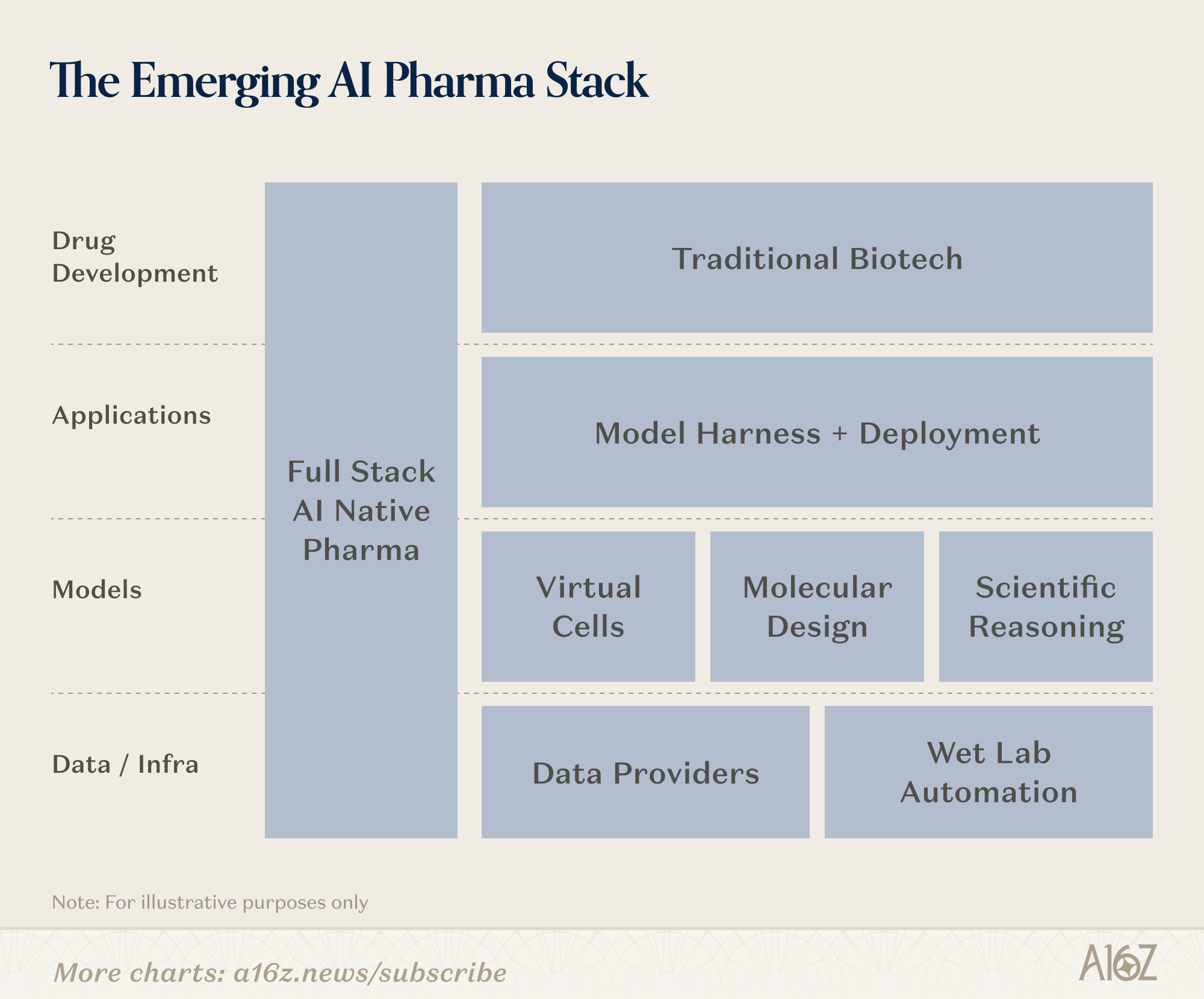
How can startups capture value in this new bio AI technology wave? Companies can sell the technology that improves drug discovery, or they can use it to develop and commercialize the drugs themselves. The second approach assumes more risk and requires more capital, but of course offers more upside potential. In some cases, startups are pursuing both business models simultaneously.
- Selling data and technology to the biopharma industry, and to frontier AI labs
There are (a few) precedents of large businesses being built with this motion. Veeva is one of the largest vertical market software (VMS) outcomes, with a $50B market cap and contracts worth over $100M with their largest accounts. Companies like Boltz and Chai also have horizontal business models, selling into pharma companies today.
Within this approach, we’re seeing several emerging categories of startups:
- Data providers & lab automation: High-quality data is a huge bottleneck for this industry. Robotic lab automation and expert data collection and benchmarking help address this problem. Companies like Medra, Tacit, Latch, and BigHat Bio are doing this today.
- Predictive models of biology: Building models to simulate how cells and larger systems like organs and even patients will respond to drugs in silico, aiming to reduce the dependency on wet labs and shorten feedback loops to increase probability of success in the clinic. Some are developing “virtual cell” models; others are investing in organoid systems; others are training specialist prediction models on proprietary datasets that are not in the public domain. Companies like Axiom Bio, insitro, Noetik, Radical Numerics, and Inductive Bio are doing this today.
- Scientific reasoning agents: Help identify overlooked opportunities by reasoning over academic literature and public or private data sets at scale, aiding the R&D process. These are typically LLMs applied to the scientific domain. Companies like Edison Scientific and Phylo are doing this today.
- Molecular design: Diffusion-based models focused on de novo drug design are the most ubiquitously adopted across the industry today. Companies like Chai and Boltz do this today. New models are also being trained for immunogenicity prediction, RNA and oligonucleotide design, protein-protein interaction prediction, and many other modality-specific design tasks.
- Model harnesses & enterprise deployment: Given the wide range of use cases for how LLMs and domain-specific models are being deployed by companies across the enterprise, there is a growing need for companies to (a) help teams select which models to use for which tasks, (b) fine-tune models with their own proprietary data, and (c) set up rapid reinforcement learning (RL) environments so that model performance on individual tasks can rapidly improve. Early applications for this have been clinical trial document management and regulatory document submission. Companies like Ephemeral, Valkai, and Collate are working here today.
- Building full-stack biotech companies
One of the opportunities we’re most excited about is vertically integrated therapeutics companies that leverage AI to discover and develop their own medicines, allowing full value capture from internally developed assets. Companies taking this strategy include Recursion, Isomorphic, insitro, Xaira, Relay Tx, and Octant Bio.
These companies integrate end-to-end capabilities across the pharma value chain, from generating experimental data and building proprietary AI models, to developing their own medicines. We see tremendous potential in connecting these activities under one roof. Findings in the lab can improve models, better models can guide experimental design and selection of drug candidates, and results from clinical trials can feed back into this process, ultimately deepening our understanding of disease and improving the next iteration of impactful medicines.
5. WHY BIOLOGY IS STILL HARD
AI transforming biology has long been a promise. We’ve made exciting progress over the last decade, but we believe the current pace of technological development is unprecedented. We’re optimistic about the impact we’ll see in the near term, but recognize that biology remains a large and complex problem space. There are some headwinds worth considering (or working to address!):
- Data-poor domain: Like other physical AI categories (such as robotics or autonomous vehicles), biology doesn’t have an internet-scale corpus of training data. For example, the largest corpus of existing high-fidelity public training data for proteins is the Protein Data Bank (PDB), a publicly available archive of 300K experimentally determined 3D structures of large biological molecules amassed over the last 50 years. This is tiny relative to the scale of internet data.
- Biology is a highly complex system: Designing successful drugs requires a deep understanding of the multilayered biologic systems that a drug is seeking to perturb. The scale of data needed to model biology comprehensively is massive (likely much larger than language, on top of limited existing data mentioned above). Doing so may require meaningful architectural improvements or more localized models. As Daphne Koller, founder of insitro, has argued, better molecular design won’t necessarily result in more effective drugs if we don’t understand which biological mechanisms to target first.
- Non-verifiable domain with long feedback loops: Unlike other fields such as math or coding, drug designs or biological insights generally can’t yet be fully validated on a computer today (“in silico”). Validation of drug designs happens in a wet lab and ultimately in humans, via clinical trials regulated on very long timelines.
We’re seeing startups address each of these challenges head-on, but just how much these approaches can speed up feedback loops in the biopharma industry is still unknown.
It’s hard to think of a more impactful application of AI than developing better medicines faster and at lower cost, and building a better machine to understand and treat every health condition we can think of. It’s time to solve disease – and we’re excited to continue backing teams who are working to make this possible.